
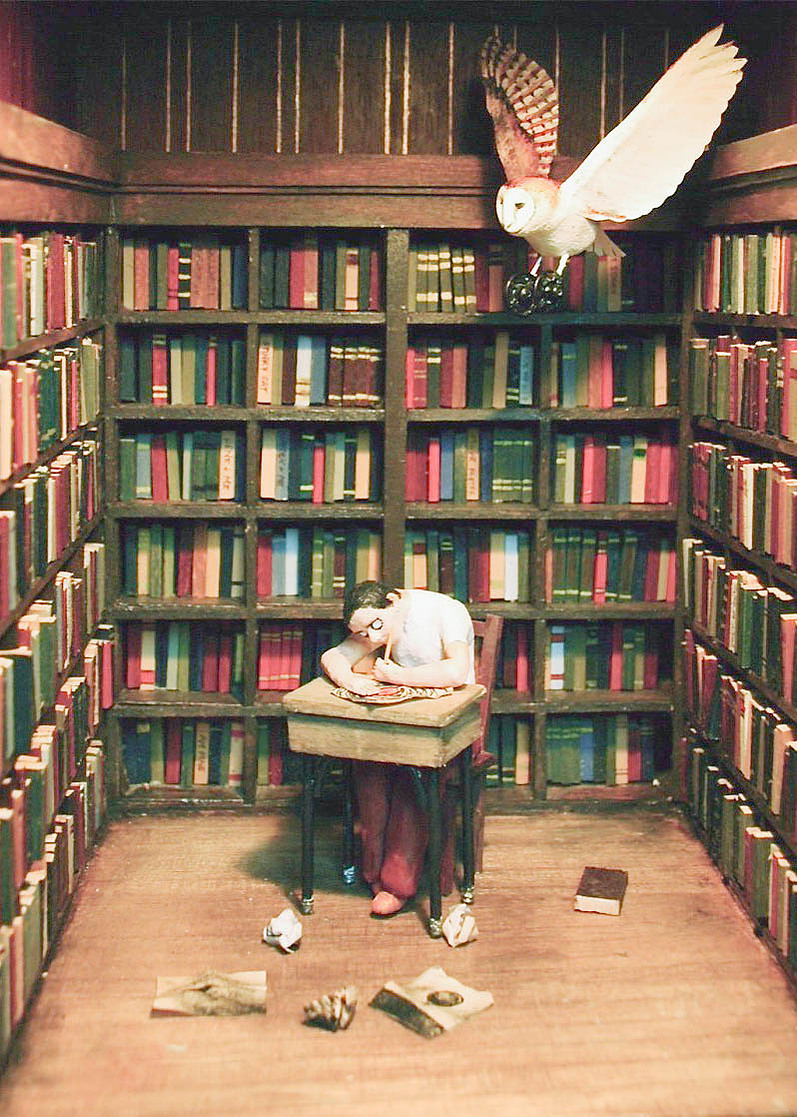
Julia Hepburn knows what a good story feels like. The scenes in her doll-sized vignettes give us the sense of catching a dark fable somewhere in the middle.The plot may be missing, but the settings, characters, and their tragic/comic relationships have all the qualities of belonging to a great tale in line with those of the Brothers Grimm.
As in the best Victorian or Teutonic tales, animals and humans intermingle, exchange roles, become friends and antagonists. There’s always an edge of threat to even the most obviously comic of scenes. An apron-wearing seagull raises a large cleaver to cut another slice from severed thumb in “Sometimes Seagull’s Don’t Beg” (below left). Somehow Red Hen’s parachute failed to open in time (“The Death of Red Hen” below, right). In “Julia’s Murder” (below, center), one doesn’t know the crime has happened already or is about to take place.

“The works reflect my desire to re-insert myself into the natural order and often exhibit my tendency to assign human personalities to animals.” — Julia Hepburn
Though the tendency is to lean right into one of Julia’s tiny worlds, we’re keep apart from them by their encapsulating frames, boxes and lanterns. Like waking up from a dream your were becoming too involved in, the frames provide a sense or relief and a reminder that they’re only stories.
Originally published on Nov 20 2010